Talk to our sales team
+55 11 5189-4120
Events
Product launch event: how to organize it
How to organize a product launch event: goal, format, timeline, venue and travel logistics for guests coming from other cities, step by step.
 5 min read
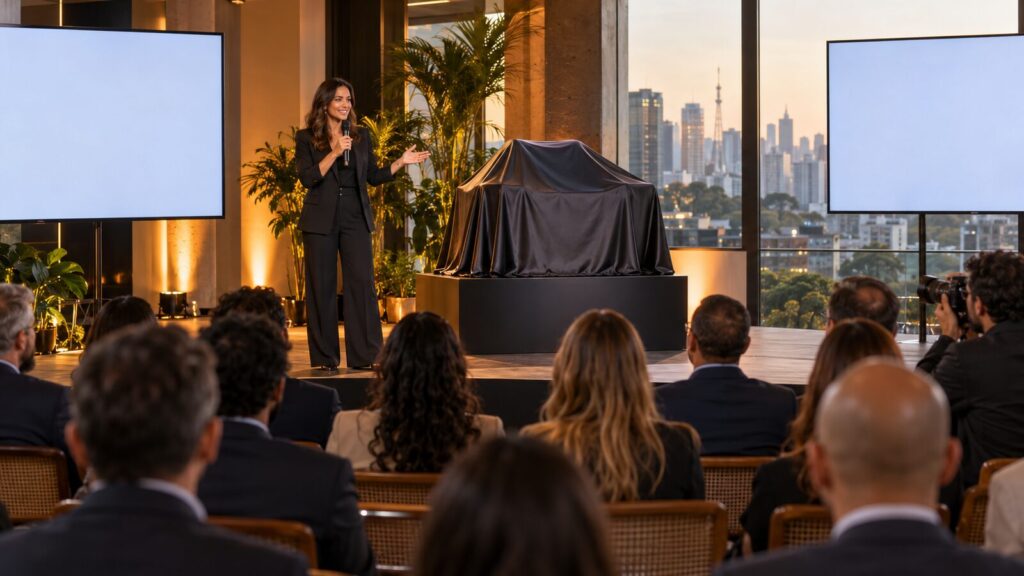
A product launch event leaves little room for error. There is a fixed date, often tied to a marketing campaign, guests with different profiles, such as press, clients, distributors and the sales team, and the expectation that everything will work from the very first minute. When logistics fail, attention shifts away from the product to the delay, the queue or the half-empty room.
Running a good launch means defining the goal, choosing the right format and taking care, well in advance, of the venue, invitations, travel and accommodation for guests coming from out of town. At ArrowTur, which has been organizing corporate events and travel since 1989, we see that the smoothest launches are the ones with a clear timeline and one person responsible for each area. This guide shows the way.
Define the goal and the audience
Before choosing a venue or date, answer this: what does the event need to achieve? Press coverage, distributor orders, sales team enthusiasm and customer trials are different goals and call for different formats.
- Press and opinion leaders: a short presentation, a demo, a well-prepared spokesperson and material for coverage.
- Clients and distributors: time to try the product, talk to the team and understand commercial terms.
- Internal team: product training, sales arguments and targets, often combined with a sales convention.
It is common to hold more than one session, for example press in the morning and clients in the evening, or separate events in different cities.
Choose the format and the date
The most common formats are an in-person event at an event venue or hotel, a hybrid event with a live stream, and a series of presentations in several cities. The choice depends on the size of the audience, where it is located and the budget.
For the date, check the industry calendar so you do not clash with trade shows, competitors’ events or public holidays. Also consider the product’s availability: launching something customers will only find months later tends to cool interest.
Build the timeline early
The ideal lead time depends on the size of the event, but a launch with guests from other cities needs a few months of preparation. A reference sequence:
- Well in advance: goal, audience, budget, date and venue booking; hotel room block for out-of-town guests.
- Next: save the date, choice of suppliers (audiovisual, catering, set design) and presentation script.
- A few weeks before: formal invitations, RSVPs, ticket issuance and transfer logistics.
- Event week: full rehearsal with the product, technical check, final guest list and briefing for the reception team.
- After the event: material sent to press and guests, sales follow-up and results analysis.
Venue, setup and product presentation
The venue should serve the demonstration, not the other way around. Assess:
- capacity for the expected audience, with room for staff and press;
- easy access from airports and from the guests’ hotels;
- ceiling height, power supply and loading area for the product and the set;
- stable internet, essential for streaming and digital demos;
- separate areas for interviews, product trials and networking.
Hold at least one full rehearsal at the venue, with the real product, the sound and video equipment and the timing of each speech.
Out-of-town guests: flights, hotels and transfers
When journalists, clients or distributors come from other cities, travel logistics become part of the launch experience. The key points:
- Flights: tickets issued in each guest’s correct name, with schedules that allow them to arrive with time to spare and return without missing the program.
- Accommodation: a room block near the venue, with a deadline to release unused rooms without penalty.
- Transfers: airport meet-and-greet and transport between hotel and venue, with times aligned to the run of show.
- Communication: a guide with times, addresses and contacts sent to each guest before the trip.
- Contingencies: a support channel for flight delays, rebookings and last-minute changes.
How to measure the results
Set the indicators before the event so you know whether it met its goal. Some examples: attendance rate compared with confirmed guests, number of articles published, sales leads generated, orders or pre-sales in the following weeks, and answers to a guest satisfaction survey.
Product launch events with ArrowTur
ArrowTur handles logistics for guests and staff at product launches: group ticketing, hotel room blocks and rooming management, transfers between airport, hotel and venue, and support for travelers before and during the trip. We also help choose the destination and venue when the launch takes place outside the company’s home city, and we bring all charges together in centralized billing.
Our team is available Monday to Friday, 7 a.m. to 7 p.m. (Brasília time), with emergency support outside those hours. Learn more about our corporate event services and talk to our sales team by phone at +55 11 5189-4120, on WhatsApp or through our Contact Us page.
Read also: How to plan a corporate event: complete checklist.
Frequently asked questions
How far in advance should a product launch be planned?
For events with guests from other cities, it is best to start a few months ahead to secure the venue, hotel rooms and flights on better terms.
Is a hybrid launch worth it?
Yes, when part of the audience is far away or when press from other regions matters. In that case, stable internet and a dedicated technical team are essential.
Does the company have to pay for journalists’ travel?
There is no single rule. Some companies invite the press with expenses paid and others hold local sessions. What matters is stating the terms clearly in the invitation.