Talk to our sales team
+55 11 5189-4120
Events
Corporate event venue: how to choose without surprises
How to choose a corporate event venue: capacity by layout, access, technical setup, lodging and the contract points that make a difference to the cost.
 5 min read
Choosing the venue is one of the first decisions in any event, and it shapes almost all the others: date, budget, transport, agenda and even the mood of the gathering. A beautiful space that is hard to reach or too small for the planned format creates extra cost and strain for your team and your guests.
At ArrowTur, which has organized events and corporate travel since 1989, we see that the right venue is not necessarily the best known or the most expensive, but the one that serves the event’s purpose with the fewest risks. Here is how to assess a corporate event venue carefully before signing the contract.
Start with the goal and the audience
Before researching venues, answer a few questions: is the event meant to align the team, train, reward or host clients? How many people should attend, where will they come from and how long will they stay? A sales convention with a plenary and breakout groups needs a different setup from a client dinner or a leadership retreat, where privacy and quiet matter more.
Define your constraints as well: budget range, possible dates and any specific audience needs, such as accessibility. With this summary in hand, the search gets shorter and suppliers can respond with comparable proposals.
Capacity: look at the layout, not just the number
A venue’s stated capacity depends on the setup. The same room holds many more people theater-style than at round tables or classroom-style. So ask for the floor plan and the capacity for each layout you plan to use.
- Allow for the stage, screen, reception area and booths, if any.
- Check for support rooms for smaller groups, parallel meetings and the production team.
- Look at ceiling height, columns and sightlines from the back of the room.
- Plan the coffee break and meal areas apart from the main room, so you do not need to reset it.
Some extra room helps, but a space that is too large also gets in the way: the room feels empty and costs rise for no reason.
Access and getting attendees there
Map where your guests are coming from. If most live in the city, check traffic at arrival and departure times, parking and public transport. If the group is coming from several states, consider the distance to the airport and the flights available on the event dates.
Remote venues, such as resorts and country hotels, cut distractions and encourage bonding, but they usually call for chartered transport and extra travel time. Add that cost when comparing them with a city hotel. It is also worth checking access for setup trucks and the loading and unloading times.
Technical setup and services
During the site visit or your conversations with the venue, confirm what is included and what is charged separately. These are the points that cause the most trouble:
- Internet: the bandwidth dedicated to the event, especially with streaming or an attendee app;
- Audiovisual: sound, projection, microphones, lighting and whether the house supplier is mandatory;
- Power: electrical capacity for equipment, and whether there is a generator;
- Food and beverage: menus, dietary restrictions, rules on outside catering and service times;
- Climate and noise: whether temperature can be controlled by room and whether other events are next door that day;
- Staff: who will be responsible for your event on site and how to reach that person during the program.
Lodging, safety and accessibility
When guests stay overnight, the event and lodging should ideally be in the same place or very close. Check how many rooms are available on your dates, the room types and the room block rules: until when you can reduce the block without a penalty, and how check-in and check-out times fit the agenda.
Also review exit routes, signage, emergency procedures and the presence of a fire brigade or medical support, especially for large events. Look at accessibility items too: ramps and elevators, adapted restrooms and accessible rooms, plus reserved seating in the main room. Confirming early avoids improvised solutions for guests who need these features.
Contract and negotiation
The lowest price per person does not always mean the lowest total cost. Compare proposals on the same basis and read these points carefully:
- what the room rate includes, such as setup, water, internet and equipment;
- minimum food and beverage spend and service charges;
- deadlines for confirming the final number of attendees;
- cancellation and reduction penalties, with the schedule of dates;
- what happens in the event of force majeure or construction at the venue;
- supplier exclusivity and fees for bringing in third parties.
Negotiate early: off-season dates and weekdays usually leave more room. Get everything in writing and, whenever possible, make a site visit with your production team before signing.
Corporate event venues with ArrowTur
You tell us the goal and your ideas for the event, and ArrowTur helps compare venue options and negotiates with suppliers: airlines, hotels, transfers, insurance and equipment. We serve everything from small meetings to large conventions. Learn more about our corporate events service.
Our team is available Monday to Friday, 7 a.m. to 7 p.m. (Brasília time), with emergency support outside those hours. To reach our sales team, call +55 11 5189-4120 or message us on WhatsApp.
Read also: Corporate event destinations in Brazil: how to choose.
Frequently asked questions
How far ahead should I book the venue?
It depends on the size and the season. Large events or those in high season call for several months’ notice, because the best spaces and dates go first.
Is it better to hold the event in the city or outside it?
In the city, access is easier and transport costs less. Outside it, there is more bonding and less distraction, but you need to plan transport and lodging for the group.
Is a site visit really necessary?
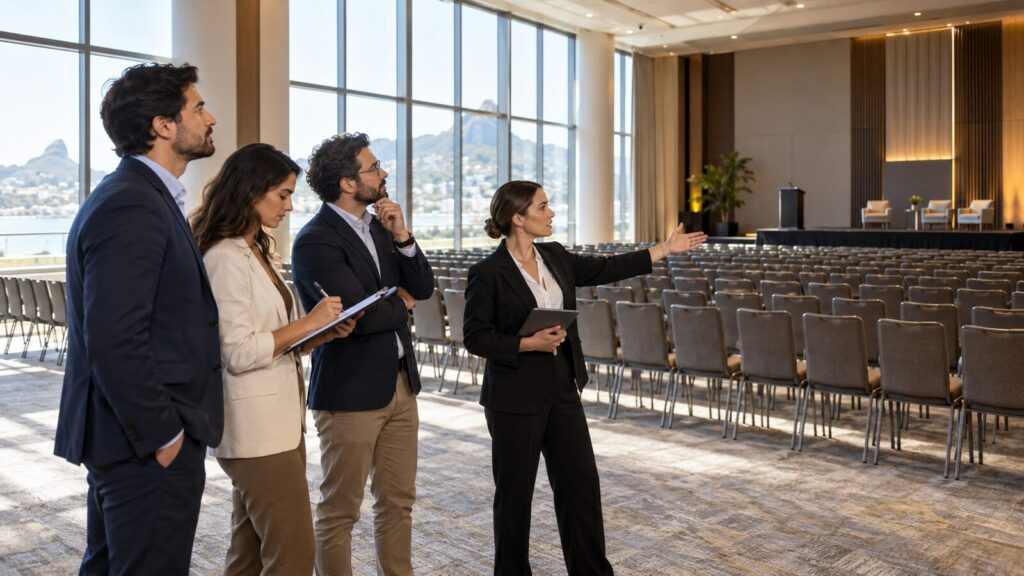
Whenever possible, yes. Photos do not show noise, columns, access or the true condition of the equipment, and the visit is your chance to meet the person who will look after your event on site.