Talk to our sales team
+55 11 5189-4120
Corporate travel
Executive travel: managing schedule, comfort and safety
Flights, hotels, transfers and airport lounges: how to plan executive travel with an efficient schedule, comfort that drives productivity and solid safety.
 6 min read
An executive’s trip is rarely just a journey from A to B. In a few days, they need to arrive rested for a decisive meeting, keep a tight schedule across more than one city, answer the office along the way and be back in time for the next commitment. A delayed flight, a transfer that never shows up or a badly located hotel costs more than the room rate: it can put an entire negotiation at risk.
Since 1989, ArrowTur has organized trips for directors, partners and leadership teams, and experience shows that the secret lies less in luxury and more in planning. Executive travel works well when schedule, comfort and safety are considered together, with clear rules in the company policy and a service team that acts fast when something changes.
What is different about an executive’s trip
From an operational standpoint, three factors set an executive’s trip apart from a typical employee’s. The first is the value of time: every hour lost in long connections or queues is expensive for the company. The second is exposure: executives carry sensitive information and, in some contexts, attract more attention. The third is how often plans change: leadership schedules are rearranged more frequently, which calls for more flexible fares and bookings.
That is why it makes sense for the travel policy to include specific rules for leadership roles, set transparently and approved by the board, rather than exceptions decided case by case.
Schedule: less time wasted, more useful time
A good travel schedule starts with the choice of flights. A few practices make a difference:
- Direct flights whenever possible, even if they cost a little more, when a connection would mean hours of extra travel.
- Times that match the agenda: arriving the night before an important morning meeting is usually worth more than a red-eye flight.
- More flexible fares for changes, since executive schedules shift often.
- Buffer time between meetings, based on real city traffic, not just distance on the map.
- A consolidated itinerary in a single document, with flights, hotel, transfers, contacts and meeting addresses, shared with the executive assistant.
Comfort that translates into productivity
Comfort in executive travel is not a whim: an executive who sleeps poorly or arrives exhausted performs worse exactly when the most is expected of them. The policy can set out, objectively, items such as:
- Cabin class by flight duration: many companies set a number of flight hours above which business class is allowed for certain roles.
- Seats assigned in advance, preferably aisle seats or front rows for a faster exit.
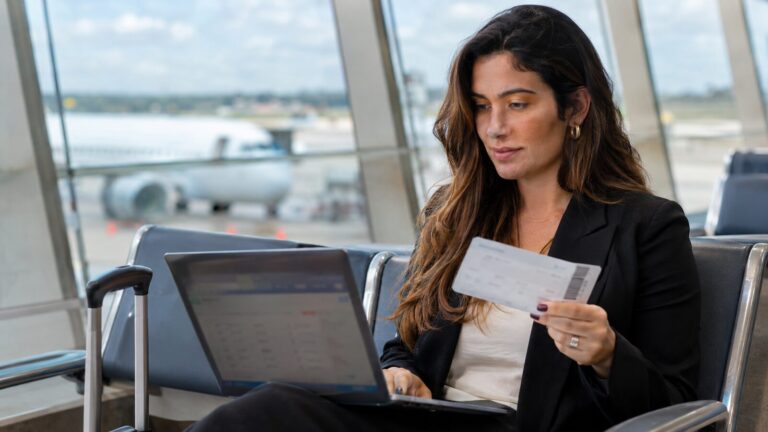
- Airport lounge access for long waits or connections, so they can work in peace.
- A well-located hotel, close to the meetings, with good Wi-Fi, a work desk in the room and an early breakfast.
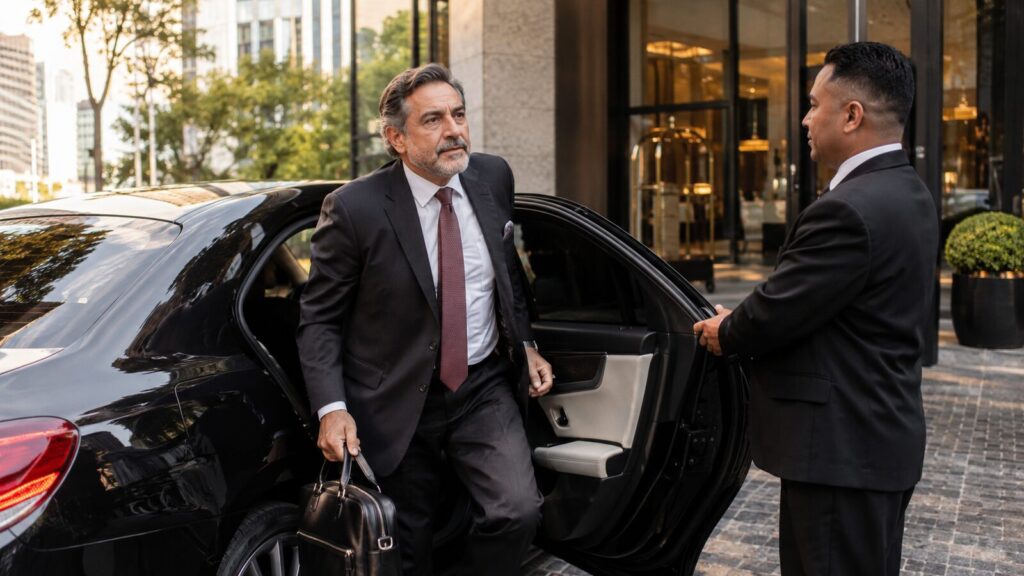
- An executive transfer waiting at arrivals, instead of a taxi line or waiting for a ride-hailing car.
The key point is that these items are written into the policy. That way, decisions do not depend on negotiation before every trip, and costs remain under control.
Safety of the executive and of information
Safety in executive travel has two fronts. The first is physical: choosing hotels in safe areas, using pre-booked transportation, not publicizing itineraries and, in higher-risk destinations, considering local support. The second is information: laptops and phones carry strategic data, and conversations in public places can expose ongoing negotiations.
- Do not post the itinerary on social media, and limit who receives the full schedule.
- A discreet name sign at the transfer, without the company name when it is not needed.
- An emergency contact that works outside business hours, for the executive and for whoever manages their schedule.
- Travel insurance suited to the destination, with coverage that matches the trip profile.
- Digital precautions such as a VPN, a screen privacy filter and devices always in carry-on baggage.
Assistants and the booking flow
In practice, the person who organizes an executive’s trip is usually an executive assistant. Making that person’s job easier is one of the most effective ways to improve the travel experience. That means allowing them to book on the executive’s behalf in the company’s system, having a dedicated travel consultant who knows the traveler’s preferences and receiving confirmations and changes through a single channel.
A complete traveler profile, with documents, loyalty programs and seat and hotel preferences, avoids rework and mistakes. And a fast approval flow, with approval by phone, keeps an urgent trip from stalling while it waits for a signature.
When the schedule changes mid-trip
Meetings that run long, cancelled flights and new appointments are part of the routine. What sets a good operation apart is the ability to react quickly: rebook the flight, adjust the hotel and the transfer and notify everyone involved without the executive having to stop what they are doing. That is why human service, with someone who actually answers and solves the problem, makes such a difference on this type of trip.
Executive travel with ArrowTur
ArrowTur organizes executive travel with consultants who know each traveler’s preferences, flights and times chosen around the agenda, hotels with negotiated rates, transfers and airport lounge access when the policy allows it. Executive assistants can book through our self-booking tool, with approval by phone, and count on our team Monday to Friday, 7 a.m. to 7 p.m. (Brasília time), with emergency support outside those hours for changes and unexpected events. Learn about our corporate travel solution or register your company.
To talk to our sales team, call +55 11 5189-4120 or message us on WhatsApp.
Read also: Executive transfer, taxi or ride-hailing app: how to choose.
Frequently asked questions
Should executives have a different travel policy?
It does not need to be a separate policy, but it is common to have role-based rules, such as cabin class by flight duration, hotel category and use of transfers. What matters is that they are written down and approved.
When is a more expensive direct flight worth it?
When a connection greatly increases travel time or the risk of missing an important meeting. The cost of the executive’s time usually justifies the difference.
Can the assistant book on the executive’s behalf?
Yes. Self-booking tools allow assistants to be authorized to book for other travelers, following the same policy and approval flow.